
Well Pump Not Working? Find the Electrical Cause Fast and Get Your Water Back
No water at the tap usually means one of a handful of electrical problems. Work through them in order, safely, and you will know what to fix or who to call.
 By Clement James, Tervano Electric · Twin Falls, Idaho · November 2026
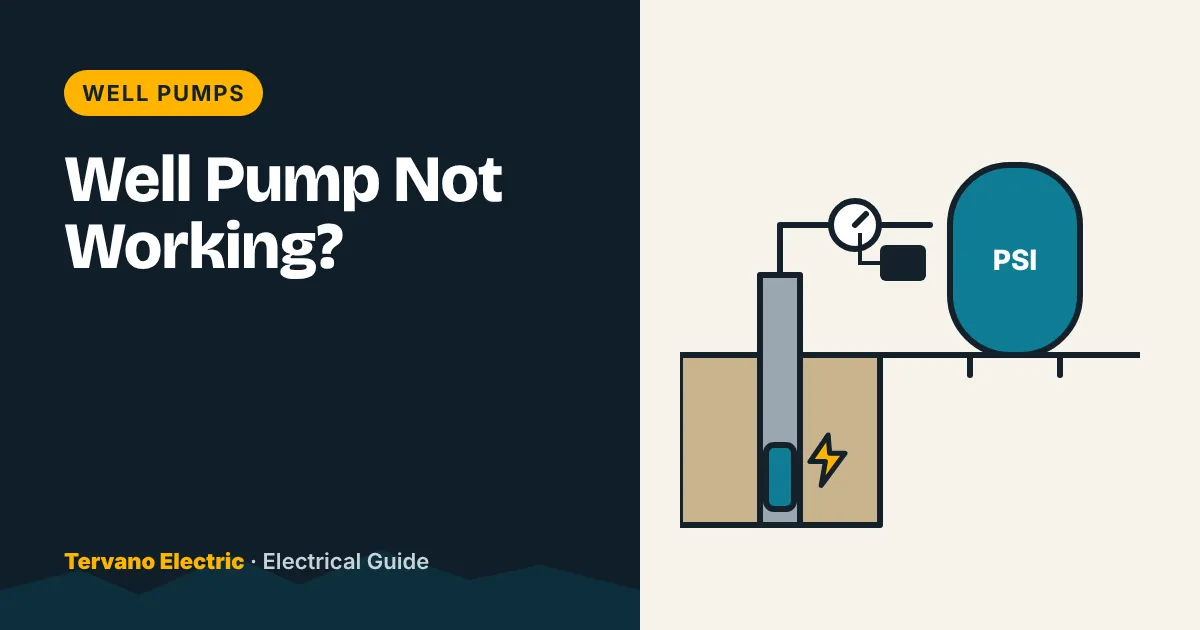
Well pump not working? The cause is usually electrical. Check these in order. Start with the breaker, the pressure switch and the pressure tank. Then check the control box, the wiring and the motor. Most homeowners can safely check the first three. Testing the control box, wiring and motor needs a meter and a licensed electrician or well contractor.
Safety first. Most well pumps run on 240 volts. Turn off the well breaker before opening a pressure switch cover or control box. If the wellhead or pump house has flooded, do not touch any electrical parts. Call a professional.
It is 6 a.m. You turn on the shower and get a sputter, then nothing. The kitchen tap does the same. If you live on a private well, that moment is stressful. The good news is that the problem is often simple, and you can narrow it down in minutes.
This guide walks you through each electrical cause, from a tripped breaker to a failed motor. You will learn what each part does, how to spot the fault and what it takes to fix it. If you need hands-on help, our well pump electrical repair service page explains what a service call covers.
How does a well pump system work?
A well pump pushes water into a pressure tank. A pressure switch turns the pump on when pressure drops and off when it reaches the set level.
- Breaker feeds power to the pump circuit, usually a 240 volt double-pole breaker.
- Pressure switch senses water pressure and switches the pump on and off.
- Pressure tank stores water under air pressure so the pump does not start every time you open a tap.
- Control box holds the start capacitor and relay on three-wire submersible pumps.
- Drop cable runs from the wellhead down to the pump motor.
- Pump motor sits in the well (submersible) or beside the tank (jet pump).
Two-wire vs three-wire submersible pumps
A two-wire pump keeps its starting parts inside the motor, down in the well. A three-wire pump keeps them in a control box above ground. Count the wires at the pressure switch or look for a gray box on the wall near the tank. That tells you which type you have.
Well pump not working? What should you check first?
Start with power, then the pressure switch, then the tank. These three cause most no-water calls and need no special tools.
- Check the breaker. Find the breaker labeled well or pump. Reset it once if it is tripped.
- Look for a separate pump switch. Many homes have a disconnect or switch near the tank. Make sure it is on.
- Read the pressure gauge. Note the pressure on the gauge near the tank.
- Listen at the pressure switch. A click when pressure is low means the switch is trying to start the pump.
- Check other circuits. If other things in the house are dead too, the problem may be a utility outage or a main breaker.
If the breaker trips again right away, stop. That points to a short circuit in the wiring, control box or motor. Read why a breaker keeps tripping to understand what that means.
What are the most common electrical causes of a well pump not working?
Nine faults cause most well pump failures. They are listed here from easiest to hardest to fix.
1. Tripped breaker or blown fuse
Power surges, lightning and short cycling can trip the pump breaker. One trip can be a fluke. Repeat trips mean a real fault downstream.
2. Burned or pitted pressure switch contacts
The contacts inside the pressure switch open and close thousands of times. Over years they burn and pit. A classic sign is a pump that starts when you tap the switch cover. Replace the switch rather than filing the contacts.
3. Clogged pressure switch tube
Sediment and rust can plug the small tube under the switch. The switch then cannot sense the real pressure. Cleaning or replacing the tube often fixes it.
4. Waterlogged pressure tank
When a tank loses its air charge, the pump short cycles. It turns on and off every few seconds. That wears out the switch, the capacitor and the motor. It is the hidden cause behind many electrical failures.
5. Failed start capacitor or relay
On three-wire pumps, the control box gives the motor a starting boost. A pump that hums but will not start often has a bad capacitor or relay. A failed capacitor is usually a symptom of short cycling, so fix the tank too.
6. Low voltage
Voltage at the pump should stay within about 10 percent of the motor rating. Undersized wire on a long run, a loose connection or a weak generator can starve the motor. It then runs hot and trips.
7. Damaged wiring or splices
Rodents chew wires. Frost heave, digging and old splices fail. Water in a wellhead splice can cause a ground fault. Damaged wiring often trips the breaker instantly.
8. Lightning or surge damage
Well pumps sit at the end of long wires and are grounded through the water. That makes them easy targets for lightning. A surge arrester at the control box or panel helps. Learn more about whole-home surge protection.
9. Failed pump motor
Motors wear out after years of service, especially after short cycling or running dry. A failed submersible usually means pulling the pump from the well.
Well pump not working: what do the symptoms mean?
The way your pump fails tells you where to look. Use this table to match the symptom to the most likely cause.
| Symptom | Most likely cause | Other possible causes | DIY check? |
|---|---|---|---|
| No water, breaker tripped | Short in wiring or motor | Lightning damage, failed capacitor | Reset once only |
| No water, breaker fine, no click | Pressure switch failed | Clogged switch tube, loose wire | Yes, with power off |
| Pump hums but will not start | Bad start capacitor or relay | Low voltage, stuck pump | No, call a pro |
| Pump turns on and off every few seconds | Waterlogged pressure tank | Clogged switch tube | Yes, check tank air |
| Pump runs but never shuts off | Low water in well or broken pipe | Pressure switch stuck closed | Partly |
| Low water pressure | Switch set too low | Tank charge, clogged filter, worn pump | Yes |
| Pump trips breaker after running a while | Overheating motor or low voltage | Undersized wire, failing motor | No, call a pro |
| Water spits air at faucets | Low water level in well | Leak in drop pipe | No, call a well contractor |
How we built this table: each symptom is matched to the cause that most often produces it in residential wells, followed by other likely causes. The last column shows whether a homeowner can safely check it without opening live electrical parts.
How do you test and adjust a well pump pressure switch?
A pressure switch has two settings, cut-in and cut-out. The pump starts at cut-in and stops at cut-out. Common settings are 30/50 and 40/60 psi.
How to check the switch
- Turn off the pump breaker.
- Remove the switch cover.
- Look for burned, pitted or welded contacts.
- Check for loose or scorched wires.
- Look at the pressure tube under the switch for rust or sediment.
- Replace the cover before turning the power back on.
How to adjust the pressure
The large nut raises or lowers both settings together. The small nut changes only the cut-out. Turn nuts in small steps, then watch the gauge through a full cycle. Never set the cut-out above the switch or tank rating.
Match the tank to the switch
The tank air charge should sit about 2 psi below the cut-in setting. Check it with the pump off and the tank drained, using a tire gauge on the tank valve.
How do you know if a well pump control box is bad?
A bad control box usually shows up as a pump that hums, clicks or trips without starting. Only three-wire pumps have one.
- A humming sound with no water flow
- A burned smell or bulging capacitor inside the box
- A relay that chatters during start
- Voltage present at the box but not leaving it
A qualified technician tests the capacitor with a meter and checks the relay. Never discharge or handle a capacitor bare-handed. Capacitors can hold a dangerous charge even with the power off.
What wire size and breaker does a well pump need?
Wire size depends on the pump horsepower, voltage and the total wire length from the panel to the motor. Long runs need bigger wire to limit voltage drop.
| Item | Typical residential setup | Why it matters |
|---|---|---|
| Voltage | 240 volts for most submersibles, some jet pumps on 120 volts | Wrong voltage burns out the motor |
| Breaker | Double-pole breaker sized to the motor and wire | Protects the wire and allows motor starting |
| Wire to the wellhead | Copper building wire sized for the run | Undersized wire causes low voltage |
| Drop cable in the well | Submersible pump cable rated for water | Regular wire fails under water |
| Disconnect | Switch or breaker within sight of the controller | Lets you shut off power safely |
Pump makers publish maximum cable length charts by horsepower and wire size. Use them, and have the circuit installed under an electrical permit by a licensed electrician. For the code side of motor protection, see our guide to motor circuit protectors and motor overloads.
How do electricians diagnose a submersible well pump?
Electricians test from the top down. They only pull the pump when readings prove the problem is in the well.
- Voltage test at the breaker, pressure switch and control box, with the pump running and stopped.
- Amp draw on each leg compared to the motor nameplate.
- Winding resistance of the motor through the drop cable, compared to the maker table.
- Insulation resistance with a megohmmeter to find damaged cable or a failing motor.
- Control box test of the capacitor, relay and overload.
These tests separate a bad control box from a bad motor. That matters, because pulling a pump is the expensive part of most repairs. Our electrical troubleshooting service uses the same approach.
No water and need help now?
In Twin Falls or the Magic Valley? Tervano Electric can diagnose your well pump circuit and fix the electrical side. Call (208) 719-5016 or see our emergency electrician service.
How can you prevent well pump electrical problems?
Protect the motor from short cycling, surges and low voltage. Those three cause most early failures.
- Check the pressure tank air charge once a year.
- Replace a worn pressure switch before it fails completely.
- Add surge protection at the panel and control box.
- Install a pump protection device that shuts off the pump if it runs dry or overloads.
- Size backup generators for the pump starting load.
- Keep the wellhead and pump house dry, sealed and rodent-proof.
Planning backup power for your well? Our generator sizing guide explains how to account for pump starting current. Our winter power outage checklist covers protecting the well in freezing weather. Farms with many pumps should read about our agricultural and irrigation electrical work.
Well pump not working: frequently asked questions
Why is my well pump not turning on?
The most common causes are a tripped breaker, a failed pressure switch, a waterlogged tank or a bad control box capacitor. Check the breaker and pressure switch first. Repeat breaker trips point to a wiring or motor fault.
How do I reset my well pump?
Turn off the well breaker for a minute, then turn it back on. Some pressure switches have a low-pressure cutoff lever. Hold it up until pressure builds past the cut-in setting, then release it.
How do I know if my well pump pressure switch is bad?
Signs include a pump that will not start, starts only when you tap the switch, or will not shut off. Burned or pitted contacts and a clogged pressure tube are common. Replace the switch if the contacts are damaged.
Why does my well pump hum but not pump water?
Humming usually means the motor gets power but cannot start. A failed start capacitor or relay in the control box is the usual cause. Low voltage or a stuck pump can also cause it.
What causes a well pump to short cycle?
A waterlogged pressure tank is the most common cause. Without its air cushion, the pump starts and stops every few seconds. A clogged pressure switch tube or a switch set too close can also cause it.
Can a bad breaker cause a well pump to stop working?
Yes. Breakers wear out, especially after repeated trips. A breaker that feels loose or trips at normal load may need replacement. Have an electrician test it before replacing the pump.
How long does a well pump last?
Many submersible pumps last 10 to 15 years or more. Short cycling, running dry, sediment and lightning shorten that life. Protecting the motor helps it reach full service life.
What should you do next when your well pump is not working?
A well pump that stops is almost always telling you something specific. Breakers, pressure switches and waterlogged tanks cause most failures, and you can check all three safely. Remember that silent shower at 6 a.m. In many homes, a well pump not working comes down to a reset breaker, a new pressure switch or a recharged tank.
Work through it in this order:
- Check the breaker once. If it trips again, stop and call a professional.
- Inspect the pressure switch and gauge. Look for burned contacts and wrong pressure.
- Check the tank air charge. Short cycling ruins every other part.
- Call a licensed electrician for control box, wiring and motor tests.
Have you fixed a dead well pump yourself, or found a surprising cause? Share your story or question in the comments. If you are in Twin Falls or the Magic Valley, contact Tervano Electric for help.
What was the last thing that went wrong with your well, and how long were you without water?
Sources: U.S. EPA: private drinking water wells · Family Handyman: well pump troubleshooting · InspectApedia: water pump diagnostic table.
Need an Electrician in Twin Falls?
Licensed, insured, permitted. Written estimate before work starts.
📞 (208) 719-5016Get an Estimate