
What Size Electrical Panel Do I Need? A Twin Falls, Idaho Homeowner’s Guide
100A vs 200A vs 400A — What the Numbers Mean
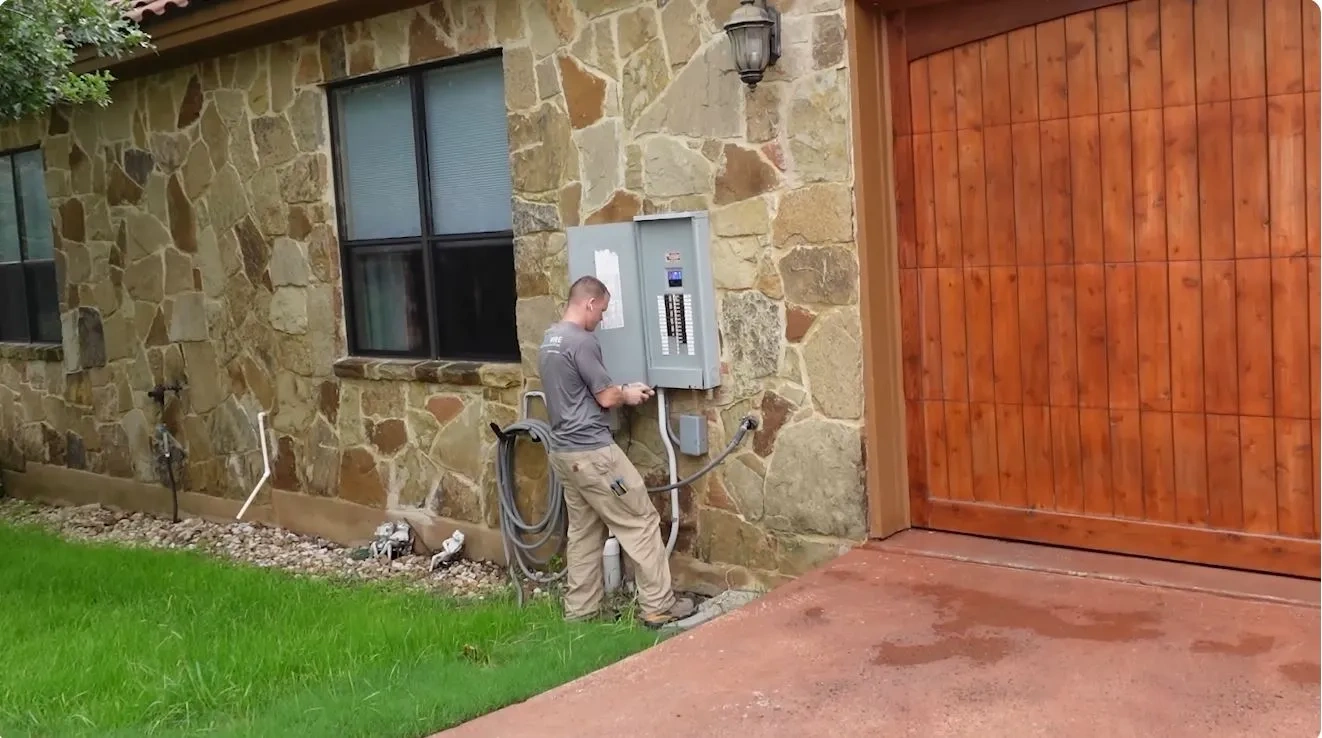
The amperage rating of your electrical panel tells you the maximum current your home’s electrical service can deliver simultaneously. It’s not about individual circuits — it’s about total capacity across everything running at once. Here’s what each service size typically handles in Twin Falls homes:
| Service Size | Appropriate For | Not Adequate For |
|---|---|---|
| 60A (very old) | Small older Twin Falls home with gas heat and no A/C | Modern homes — this size is obsolete and often uninsurable |
| 100A | Small to medium Twin Falls homes (under 1,500 sq ft) with gas heat | Homes adding EV chargers, heat pumps, or electric appliances |
| 200A | Most Twin Falls homes up to 3,000 sq ft, most modern loads | Very large homes or homes with multiple EVs + heat pump + electric heat |
| 400A | Large Twin Falls homes, high-load homes, homes with 2+ EVs + heat pump | Almost nothing — 400A handles virtually any residential load |
When a 200A Service Is Right for Your Twin Falls Home
A 200A service handles the vast majority of Twin Falls homes — and is the standard we recommend for any upgrade from 100A. With 200A you can safely run:
- Central air conditioning (3–5 ton unit): 30–60A
- Electric clothes dryer: 30A
- Electric range: 40–50A
- EV charger (Level 2, 48A): 50A
- All lighting, outlets, and appliances: 40–60A
- Heat pump (if gas supplemental): 30–40A
Add those up and a typical Twin Falls home running everything simultaneously uses 170–220A at peak. With normal diversity (everything doesn’t run at full load simultaneously), 200A handles this comfortably.
💡 The Load Diversity Rule
Electrical systems are sized with load diversity in mind — not everything runs at full load simultaneously. Your 50A dryer, 50A EV charger, and 40A range are rarely all running at 100% capacity at the same time. Load calculations account for this diversity, which is why a 200A service can safely support loads that add up to more than 200A on paper.
When a 400A Service Makes Sense for a Twin Falls Home
A 400A service is worth considering when a Twin Falls home has or plans:
- Two or more EVs charging simultaneously (two 48A chargers = 100A dedicated)
- Electric heat (not gas) for a home over 2,000 sq ft (50–100A+ for electric heat)
- Heat pump water heater in addition to heat pump HVAC
- Workshop or garage with large power tools (welders, air compressors)
- Home over 3,500 sq ft with all-electric appliances
- Small home business requiring significant electrical loads
We see increasing demand for 400A service in Twin Falls homes as EV adoption grows. If you’re buying an EV today and anticipate buying a second EV within 3–5 years, designing for 400A capacity now is worth discussing during your estimate.
How Load Calculations Work for Twin Falls Homes
NEC Article 220 provides the methodology for residential load calculations. Here’s how we approach it for Twin Falls homes:
General Lighting and Outlet Load
NEC 220.12 specifies 3VA per square foot for general lighting and outlets. A 2,000 sq ft Twin Falls home has a general load of 6,000VA (6kVA).
Appliance Loads
Specific appliance loads are added based on actual nameplate ratings: dryer (5,000VA minimum per NEC), range (8,000VA for ranges over 12kW), dishwasher, garbage disposal, and any other specific appliances.
Largest Motor Load
The single largest motor load (typically A/C compressor) is added at 125% of its rated amperage per NEC requirements.
EV Charger Load
EV charger load is added at 100% of its rated amperage (not reduced by diversity factor) per current NEC guidance — 48A for a full-power Level 2 charger.
Panel Size and Cost in Twin Falls — 2026 Numbers
| Panel Size | Installed Cost Range | Includes |
|---|---|---|
| 100A panel replacement | $1,200 – $2,000 | Permit, breakers (no Idaho Power needed if same service) |
| Upgrade to 200A | $1,800 – $3,200 | Panel, Idaho Power coordination, permit, inspection |
| Upgrade to 400A | $2,800 – $4,800 | Panel, larger meter base, Idaho Power, permit |
FAQ — Electrical Panel Sizing for Twin Falls Homes
Do I need 200A or 400A for an EV charger in my Twin Falls home?
A single Level 2 EV charger (48A) typically fits within a 200A service if your home doesn’t already have very high electrical loads. We do a load calculation during every EV charger estimate to confirm available capacity. If your existing loads plus the EV charger exceed your panel’s safe capacity, we’ll tell you — and quote both the charger installation and any necessary panel upgrade together.
My Twin Falls home has a 100A panel — is it adequate?
For a Twin Falls home under 1,500 sq ft with gas heat and no EV charger, 100A may still be adequate. For anything larger, or for homes with electric heat, EV chargers, or heat pumps, 100A is usually undersized for modern loads. We can tell you definitively with a load calculation during an estimate visit.
Can I upgrade from 100A to 400A directly?
Yes. A 100A to 400A upgrade is done in one project — not in two stages. The limiting factor is Idaho Power’s service conductors and transformer capacity. Idaho Power’s twin Falls distribution system can typically support 400A residential service with advance coordination. We handle that coordination for you.
Need an Electrician in Twin Falls?
Licensed, insured, permitted. Written estimate before any work starts.
📞 (208) 719-5016Get an EstimateSources and official references
- NFPA 70: National Electrical Code (NEC) — The electrical code Idaho work is inspected against, published by the National Fire Protection Association.
- U.S. Consumer Product Safety Commission (CPSC) — Product recalls and safety notices, including electrical panels, wiring and generators.
- Idaho Power — Outage information and service-connection requirements for Idaho Power customers.